• World War II was the deadliest conflict in human history. Fighting was done on every continent except Antartica, taking place in over 70 countries around the world. This tragedy that went on from 1939-1945 and caused an estimated 60 to 80 million lives to be lost. This war had so many new weapons used by every side of the battle but the most deadly of all was only used twice. The United States dropped the only two nuclear bombs to ever be used on Japan, the first at Hiroshima on August 6th 1945, and the second at Nagasaki on August 9th 1945.

    The idea behind using these two bombs were as a show of power to Japan, hoping to entice them into surrendering without having to commit to a ground invasion. The United States had already suffered massive casualties at islands such as Okinawa and Iwo Jima, which the Japanese defended fiercely in order to hold off American forces reaching the mainland. This made American officials worried that a mainland invasion of Japan would cause exponentially higher casualties especially since the Japanese never considered surrender as an option. Through the Manhattan Project, atomic bombs had been created and tested, the most powerful weapon ever made. It was decided that there would be two nukes dropped on Japan as a show of extreme force in a last ditch effort to get Japan to surrender. One nuke to show the power of the weapon, the next to show they were willing to do it as many times as it took.

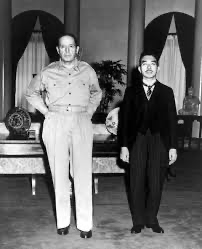
    The American plan had worked and on August 10th, 1945, the day after the Nagasaki bombing, the Japanese government issued a statement agreeing to surrender terms on the condition that the Emperor would be allowed to remain in his position. On August 15th, 1945 the Emperor publicly announced surrender to the Japanese people, and on September 2nd, 1945 the official surrender was signed, ending the deadliest conflict mankind had ever seen.
    80 years after the Hiroshima and Nagasaki bombings the decision of whether or not it was necessary to end the war is a very talked about question. Many believe that the nuking of the two cities was completely unneeded and was an unjustifiable act by the American government. The main points of argument for that viewpoint is that Japan was likely close to surrender anyway due to the Soviet Union beginning to be involved in the war along with a naval blockade; many also argued that it was a war crime to drop a bomb on innocent citizens. To add on to that, we have been seeing lasting effects of the bombings through radiation poisoning, greatly increased cancer rate of survivors, and the people who didn’t die often had to live with some sort of consequence from the bombing. It is estimated that 150,000 people died directly after the bombs dropped, another 80,000 by the end of 1945 due to lasting effects, and between 300,000-400,000 later on in life due to those same effects such as radiation poisoning. It was an incredibly inhumane act and people suffered their whole lives because of the bombings, even if they did survive.

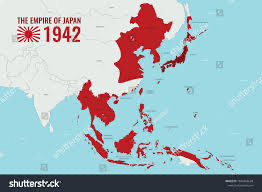
    Despite what others say, there are people who still support the U.S. government’s decision to drop the bombs as a way to end the war now. Leading up to the bombings, America had just fought a series of grueling battles up a series of islands to reach the Japanese mainland. This push to just have the opportunity to invade Japan cost hundreds of thousands of lives across both sides with there being over 100,000 casualties in total over the three year fight for Okinawa. The invasion of the Japanese mainland was projected to cost over 1 million lives between American and Japanese forces and there was no idea how long it would take to complete such an invasion. By this point in the war the rest of the axis powers had been defeated and it was just Japan left due to their no surrender mentality. Japan had invaded and occupied a huge portion of the south east hemisphere during the early stages of WWII and had most of it taken back by this point. Yet the Japanese fought with everything they had, meaning the homeland would be the most fiercely protected. In the eyes of President Truman and U.S. government, it was a sacrifice that had to be made.
    Seeing how brutal the fighting had been for both sides up to this point in the war, I do think dropping the nuke was the only way to get Japan to surrender immediately. I believe Japan would’ve fought tooth and nail to defend the mainland and it would’ve been an invasion that rivaled Normandy. However, I also believe that dropping the nukes on innocent civilians was an incredibly inhumane act and was not necessary to insure surrender. Considering the impact the bombs had on bystanders for the rest of their lives, I believe there should have been a nuke dropped in an unpopulated area as a display of power instead of leveling a populated city. A weapon of destruction on a level nobody had ever imaged before would be a display of power no matter where it was detonated. Maybe if that still didn’t cause surrender and there were more and more lives being lost then there is the idea to do what America did, but even then it is still an incredibly inhumane act.
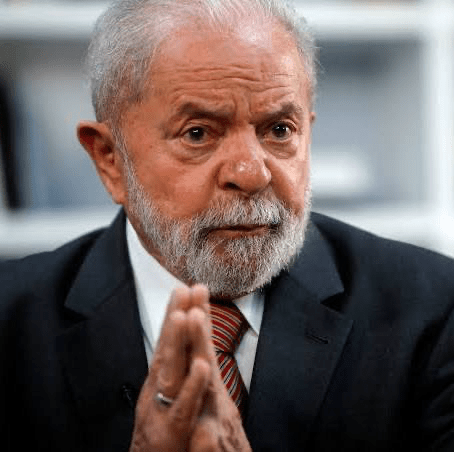
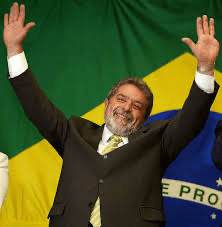
  • Lula Da Silva is probably the most beloved President that Brazil has and he has been trying to make big changes during his 3rd time, with critics having mixed opinions about his effectiveness so far.

    Lula Da Silva has been working his whole life trying to better the lives of himself and his fellow Brazilians. After Lula and his family, including his seven siblings, fled to Sao Paolo he began working at age 12 at a variety of different jobs including a shoe shiner and an office boy. At 14 Lula changed his career path and began a 3 year course while working in a screw factory that ended with him being a certified metallurgist. After getting this diploma he began to work in various factories eventually landing in Indústrias Villares, where he first got into contact with the trade union movement alongside his brother José Ferreira da Silva.

    In 1969 after working with unions for several years Lula was elected as a substitute on the council of the Metalworkers Union of São Bernardo do Campo and Diadema and was President by 1975, receiving an astonishing 92% of the votes from the over 100,000 workers he represented. After some years, Lula and the other members of his union created the first Worker’s Party and began to campaign for smaller government offices. Lula also suffered his first political arrest due to an organizing a union strike.

    Starting in 1989 the Worker’s Party starting putting Lula as a presidential candidate but lost in the first few elections. Finally, in 2002 Lula was elected for his first term as President of Brazil where he worked to improve income distribution and had record levels of job creation while raising the minimum wage in Brazil by over 50%. Due to his changes in his first term, Lula was reelected in a landslide where he got a record shattering 58 million votes to push Lula into a 2nd presidential term.

    In his 2nd term Lula continued to earn the love and support of Brazilians when he prepped the country for the wave after the 2008 financial crisis by lowering interest rates and taxes while giving incentives for consumption. These policies allowed Brazil to tank the economic crisis with minimal losses. Due to his consistent work for the good of the people Lula left office in 2011 with a historic 87% approval rating. This would be the 2nd highest ever being George W. Bush in October of 2001 with 92% and George H.W. Bush in February 1991 with 89%. However, the two Bush’s had all time low approval ratings at one point with 19% and 29% respectively, while Silva’s never dropped below 50%.

    After leaving his presidential position, Silva got into some legal trouble due to alleged corruption and money laundering in which he was given a beachfront apartment in exchange for helping the oil company Petrobras secure government contracts. He served 580 days in prison before the Supreme Court annulled the conviction due to evidence the judge was biased and lacked jurisdiction. After being released in 2019 he began to build up hype for another run at President, which he won and started his term in January of 2023.

    Silva has maintained an approval rating of slightly above 50% throughout the duration of his term so far and he has done it by continuing to attempt to make improvements to the country, his main one being to preserve the climate and more specifically the Amazon. This has led to his COP30 bill in which it has a lot to help slow down the rate of climate destruction and even led to the Amazon rainforest hitting a deforestation low for the first time in 11 years. However, critics such as Guilherme Casarões, assistant professor at the São Paulo School of Business Administration of the Fundação Getulio Vargas still bash Silva for not improving foreign relations and still not taking a side in either the Ukraine or Gaza conflict. Silva has been traveling for 2 months out of the last year trying to give Brazil a permanent place on the world stage.

    Silva has been consistently making attempts to continue what he was doing nearly 2 decades ago and he has been succeeding in bringing benefits to his people, and has even been hinting at trying for a 4th term at age 79. This draws a connection to President Trump and his talks to tweak the constitution to allow himself to run for a 3rd time despite having an overall negative public opinion on him. Silva is an example of somebody who can actually maintain his policies and values throughout all of his terms so should there be a discussion to allow more than 2 terms per President in America?

  • With the 2026 North America World Cup seeming like it is right around the corner I think it is a good time to go back and revisit some of the forgotten controversies from the 2022 World Cup and see if we can avoid making the same mistakes.

    The 2026 North America World Cup will have games being played in Canada, Mexico, and most often America. This is the second time ever that more than one country has hosted the event and the first with three hosting it. There is a lot that goes into making such a world renowned event flow smoothly in the first place but having it go on simultaneously in three separate countries is a whole new level. The amount of work being done in preparation reminds me of the 2022 World Cup in Qatar which seemed to be lavish beyond belief.

    There was a lot of controversy that came with the lavish event though. FIFA and the Qatari government were both accused of hiding the deaths of hundreds or thousands of migrant workers hired to build the stadiums and training facilities required to host the cup. At first this was denied but after an investigation the FIFA’s subcommittee of human rights and social responsibility said that “severe human. rights impacts did ultimately occur in Qatar from 2010 to 2022.” There was over a decade of human rights violations including inhumane working conditions, wage theft, and lying about work casualties. Afterwards, the Qatari government attempted to pay reparations with a $350 million fund towards workers who experienced late or unpaid wages.

    Along with this controversy, the Qatari government also came under fire due to its anti-LGBTQ laws in which homosexuality is illegal and punishable by up to three years in prison. This initially led to many feeling unsafe with the thought of attending an event they would otherwise not hesitate to go to if they had the chance. In response to the negative attention Qatar was getting a Qatari representative said that “Everyone is welcome” and encouraged attendance of all. This softened the blow but still left many concerned whether they were willing to risk going to a country where them being themselves was illegal.

    Many countries would love to host the World Cup since it is the largest sporting event in there world and therefore brings in tons of money into the country. However, as we saw in 2022 countries who try and cut corners can commit horrible acts in the process. With the 2026 World Cup possibly being the biggest one of all time, there are understandably concerns about how something of this scale is going to be prepared and executed safely.

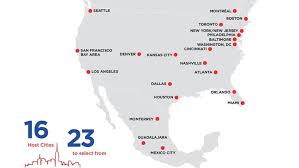
    This will undoubtedly be the biggest World Cup in history coming up next year. Not only is this the first time that three countries are hosting matches but the tournament just got drastically bigger as the pool of eligible teams was expanded from 32 to 48 teams. This makes the tournament nearly twice the size and length with the total amount of games played in the tournament also jumps from 64 to 104 games. For over 100 world televised games to be going on throughout 16 cities and 3 nations, there is a ton of stress placed on the host nations to construct and prepare everything in not only a top of the line fashion but also with a strict deadline.

    I truly do believe that the North American World Cup won’t have the controversies that we saw in the last World Cup not only because of repeating the same mistakes but also because a World Cup in America will always have a lot of news and reporting done on it so if something like this happens it will likely be caught earlier on. Overall I am incredibly excited for the 2026 World Cup and I can’t wait to see how it plays out, go U.S.A!

  • Global warming and the environment in general has been a very popular topic among both politicians and activists since the early 2000s when Al Gore first told the public about the growing yet then unknown problem of global warming. Since the initial public opinion which was generally hesitant to believe that problem, there has been an exponential rise in climate activists all around the world and of all ages.

    One of these climate activists broke onto the scene in 2018 at just 15 years old with her famous “How dare you” speech. This activist is of course Greta Thunberg, a Swedish teenager, who has been the face of climate activism the past few years bringing her into her early 20s now. Over the years Greta has been given the spotlight from many different news outlets from all across the world to spread her message.

    16-Year-Old Activist Greta Thunberg On ...

    This constant media exposure is the main reason why people are beginning to get what has been called “Greta-Fatigue” which implies that the public is tired of hearing her constant cries for change. This is in part due to her emotionally driven speeches which she often blames politicians or older generations for ruining young people’s future and the environment. However, the same people she is constantly bashing is also her audience so eventually they get tired of being called the problem despite how true it may be.

    Another part of the problem is that at this point everybody knows about climate change and the issues it brings with it. Nobody wants to be constantly reminded of a problem that we are well aware of and are actively dealing with the consequences from. Greta did realize this after a while though, but switched to a new issue, the Israel-Palestine conflict.

    Swedish climate activist Greta Thunberg at a pro-Palestine demonstration.

    Recently Greta Thunberg has changed her path from climate activist to extremely passionate supporter of Palestine. This has caused widespread controversy from all parts of the world and sides of the political spectrum. Many have called her anti-semetic for her work in organizing and leading Pro-Palestine rallies. These events themselves have even caused conflicts with governments as when Greta announced she would speak at a protest camp in Germany, the police shut down the whole event due to Thunberg being quote “potentially violent” . This is a very far way from being nominated for the Nobel Piece Prize and being 2019 Person of the Year.

    Greta went on to anger even more of the public by beginning to claim that capitalism was furthering global warming and needed to change. These newfound ideals of Thunberg received criticism from both sides of the political spectrum for radicalism with Nathaniel Flakin from Left Voice stating that “my gut is telling me that it won’t be much longer until she identifies with the ideas of Marx, Engels, Lenin, Trotsky, Luxemburg, and other revolutionaries.”

    Greta Thunberg calls for an end to ...

    Despite the public’s switch of opinion of Greta Thunberg, her impact on climate activism is undeniable and the lasting effect of her efforts are still shown in new climate activists and especially with the new ‘eco-influencers’ that have been popping up all over social media. Because of Greta Thunberg people switched from numbers, scientific studies, and statistics when talking about the climate to focusing more on emotion and appealing to the public’s soft spot. You can see this strategy employed all over social media from activists not just for climate change but for all sorts of issues now. Although her spot in the limelight is fading, Greta Thunberg’s impact on activism will outlast that by a mile.

  • In 2018 the famous Korean band BTS released a song called “Anpanman”. The name being a reference to a Japanese superhero with the same name featured in a picture book series written by Takashi Yanase from 1973-2013. Anpanman is a superhero made from a red bean bread called Anpan who goes around feeding starving people from himself before going to a doctor to make himself whole again.

    Soreike! Anpanman: Hapî no Daibôken (2005) - IMDb

    When BTS released the song the intended meaning went unknown before fans started to decipher think deeper about what the artists were trying to express. One such fan being S. Park, a journalist from Soompi which is a leading source for Korean pop culture and an international fan community, claims that the artists’ meaning behind their lyrics were meant to give their audience hope through their music and performances.

    BTS continues to double down on this theme with lyrics such as:

    “I don’t have biceps or pecs

    I don’t have a super car like Batman

    The ideal hero is my fantasy

    But all I can give you is Anpan

    I’m not a superhero

    Don’t expect a lot

    I can be your hero

    Just like Anpanman, BTS doesn’t have superpowers but rather just want to help their fans. A group of journalists from The Rolling Stone continue to elaborate on their interpreted meaning of other lyrics by saying the song was “a persuasive confession of fear; a moving comment on the responsibilities of success; and an inspiring message of self-love and support for its fans.”

    The openness about the group’s struggles dealing with so much attention and scrutiny that comes with their level of fame alongside their gratefulness and support to their fans was an amazing message to have in a song. BTS was able to use an example of a superhero made out of bread, labeled as “the world’s weakest superhero” and turn that idea into something so much deeper then a picture boom series is a talent both in terms of songwriting and ability to use multiple cultures to influence the style of music. I think more artists should adopt the style of having more meaning to their lyrics because many people may resonate with those lyrics as well. There are many artists that. do this well with some being Joey Bada$$, Lauryn Hill, and Outkast, the ability to blend different cultures is a unique trait that I would love to see more often.

    Music can mean a lot to many people, including myself, so both using music and having music as an outlet makes the musicians and listeners have a closer connection through that shared love. Alongside with that, different people having different interpretations of what BTS was trying to convey through their Anpanman song shows how people can both equally resonate with deeper meanings in the same lyrics for two separate reasons. BTS knew this and wanted to put the idea into a song to thank their fans for their support and try to give them hope, regardless of what the lyrics mean to them.

  • The Ukraine and Russian war has been raging on since February of 2022 and has been a centerpiece of world headlines since its beginning. As many headlines about the complex conflict between the two nations circulate around America, closer to the conflict in the EU the issue is talked about much more. One nation in the EU has years of experience dealing with conflict with Russia as well, Finland, and they have many words of advice and has offered many helping hands to Ukraine.

    Finland had its own war with Russia called the “Winter War” which took place from 1939-1940. Although the Moscow Peace Treaty was signed to end the conflict, Finland still had to give up territories but was able to maintain independence from Russia afterwards. However, with such independence came limitations as Finland being the much smaller nation had to appease Russia leading to things such as Finland agreeing to forego joining NATO to keep Russia as an ally. Although this strategy worked between the two countries for a while it eventually broke down as Finland was tired of having to go in circles to appease Russia and eventually did join NATO which prevented Russia from retaliating. This is very similar to the conflict currently raging through Eastern Europe since one of the prevailing reasons for Russia’s push into Ukraine was that the country as attempting to join NATO right on the world superpower’s doorstep. If Ukraine joined NATO Russia would have felt incredibly threatened having a coalition partially formed just for them being in the neighboring countries and around the world.

    Despite all of the threats and complexities in that have formed throughout the last 3 years of fighting, Finland is still actively trying to help Ukraine prevail on top as much as possible. The help given includes the Finnish Ministry of Defense claims on their site they “strongly condemns Russia’s military actions in Ukraine and unequivocally supports Ukraine’s independence, sovereignty, self-determination and territorial integrity” and in regards to the aid being sent that “The combined value of all defense materiel packages submitted so far is now over EUR 2.8 billion”. This shows Finland’s unwavering support towards helping history repeat itself and secure another member of NATO.

    Finland doubles down on their support for Ukraine with Alexander Stubb, Finland’s President, saying that defensive agreements are being formed by according to The Guardian was “the coalition of the willing”. The reason behind these security guarantees is that they are another reason for Russia to avoid further international conflict without risking having to fight a war with most of the EU. Alongside these statements from the Finnish president, the French President, Emmanuel Macron, telling reporters from the Guardian that “26 nations had committed to be part of a “reassurance force” in Ukraine, with some of them committing to be present “on the ground, in the sea or in the air””. With all of these allies making waves with both physical aid sent to the war zone and both peace talks and potential security alliances being formed, there seems to be a way forming to ending the conflict. However, the U.S. has been a big question in the whole conflict with both the Finnish president and Vladimir Putin, the Russian president, meeting with President Trump and bargaining potential peace agreements.

    There seems to be an end possible in this conflict but if peace agreements don’t bring a resolution the other nations in the EU, notably Finland, have Ukraine’s back and are entirely willing to take military action if future events call for that necessity. Hopefully the war comes to a peaceful conflict but it is a two sided war and we can only pray that both sides stop losing civilians and start writing treaties.

  • There has been constant debate the past couple of years about what should be done about the Israel and Palestine conflict. Although the attention this issue has received has skyrocketed the past couple of years it has been a problem awaiting solution for decades. The area known as Israel now was originally known as British Palestine after the Ottoman Empire was split up and colonized after World War 1. This was the case until in 1948 the Israeli immigrants who had overwhelming come into the area after the tragedies of the Holocaust had been seeking an independent state in the region. After UN negotiations the territory was split up where both Israel and Palestine each had their own territory while Jerusalem was left as a special international territory. Eventually, the Arab-Israeli war broke out where the state of Israel won and began to occupy more of Palestinian Territories which led to even more conflict. Going farther forward to 1967 was when Israel fought another war against neighboring countries in the Six Day War. Israel had won the Sinai region of Egypt and had taken the West Bank from Jordan now officially occupying the entirety of what was once Palestine. Even after the Camp David Accords were signed in 1973 between Israel and Egypt the once Palestinian regions of Gaza and the West Bank were still occupied. This created an overwhelming tension between the two parties and led to two increasingly violent intifadas where Palestinians were the majority of the casualties. During this time the group known as Hamas was formed with the goal of destroying the nation of Israel and reclaiming Palestine. The conflict reached all time highs on October 7th, 2023 when Hamas had enough and attacked Israel. This is what caused the conflict in Israel that we know today. No solution has been found yet to the conflict but the prevailing opinion is there needs to be two separate states, one for Israel and one for Palestine. Despite this Israel has refused to give up any territory and many Palestinians are suffering from the conflict.

    I would personally say that the two state solution would theoretically cause the least amount of future conflict and should be what negotiations should move towards. However, I do understand that as of right now this solution would be nearly impossible to pull off due in part to Israel’s refusal to give up any territories they have to Palestine and also in part due to that after all of this conflict and hardship the two states would not be able to peacefully exist right next to each other. The reason I say that is because this is exactly how the original conflict began and I hope to see moves towards peace and talks of a solution in which it is a two state region once again but as for right now there needs to be a stop to the bloodshed before anything else.

  • A BBC article written by Ian Youngs and Paul Glynn and published in October 2023 discusses why the broadcaster refuses to use the word terrorist when talking about Hamas and their actions in the ongoing Israel and Palestine conflict. BBC stated that they refuse to use the word “terrorist” when speaking about Hamas in their articles because to them it is taking a side in the conflict. BBC continues to double down on this belief by saying “The BBC’s job is to place the facts before its audience and let them decide what they think, honestly and without ranting.” In their pursuit of writing only the objective facts for their audience to come to their own conclusions BBC left many others outraged. The UK Defense Secretary Grant Shapps was somebody who voiced his disapproval very loudly when he said BBC’s policy is “verging on disgraceful” since Hamas are “plain and simple terrorists”. This debate is split between BBC believing using terms like terrorist eliminates objectivity and allows for bias while the other side believe Hamas are terrorists and should be referred to as such.

    I personally agree with BBC on this issue because I also believe that broadcasters should be objective as possible during their reporting and let everyone personally make their own opinions through it. Referring to a person or a group of people as terrorists clearly takes a side against them and in such a controversial and complex topic allowing for bias and taking sides like that coming from such a large broadcaster can absolutely sway the public’c opinion. I understand how some people can be outraged as many do believe that Hamas are terrorists but in my opinion they are so strong about that opinion because it was all they heard from other broadcasters. When everyone has to look at the facts and come to their own conclusions there is more room for debate then a biased statement being presented as fact. I am glad the BBC is so resilient with this policy of being very careful with their langauge and hope to see other broadcasters follow suit in the future.